Choosing the right paint finish can make or break a room’s look, durability, and ease of maintenance. Yet it is one of the most commonly overlooked decisions homeowners make when planning a repaint. Here is our professional guide to understanding paint finishes and selecting the right one for every room in your home.
What is a paint finish?
The finish, also called sheen or lustre, refers to how much light the dried paint surface reflects. Paint finishes range from completely flat (no light reflection) to mirror-like high gloss (maximum reflection). Each finish has specific advantages and trade-offs depending on the room’s purpose, traffic level, moisture exposure, and the condition of the walls.
Higher-sheen finishes are more durable and easier to clean, but they highlight every bump, crack, and imperfection in the wall surface. Lower-sheen finishes hide imperfections well but are less resistant to scuffing, staining, and moisture.
Understanding this trade-off is the key to choosing the right finish for each space.
The five main paint finishes
Flat / matte
Best for: Living rooms, bedrooms, ceilings, formal dining rooms
Flat finishes absorb light rather than reflecting it, which gives a soft surface with no visible sheen. That makes them the best choice for hiding imperfections in wall surfaces: hairline cracks, patched areas, slight unevenness, and texture variations all become far less noticeable under a flat finish.
In Eastern Suburbs homes, many of which are older properties with plaster walls that have settled over decades, flat finishes are particularly useful for creating smooth-looking surfaces without the expense of complete re-plastering.
The main limitation of flat finishes is durability. They are the least resistant to scuffing and staining, and they can be difficult to clean without leaving marks. For this reason, we recommend flat finishes only for low-traffic areas where the walls are unlikely to be touched, bumped, or exposed to splashes.
Pro tip: For ceilings, always use a flat or ultra-flat finish. Any sheen on a ceiling will highlight every imperfection and look uneven under different lighting angles. Dulux Ceiling White in flat is our go-to product for ceilings across Sydney.
Low sheen / eggshell
Best for: Bedrooms, dining rooms, hallways, general living areas
Low sheen, sometimes called eggshell, has just a hint of light reflection. It is the most popular finish for general living areas in Australian homes, and for good reason: it balances appearance and practicality better than anything else on the list.
Low sheen is noticeably easier to clean than flat finishes. Light scuff marks, fingerprints, and minor marks can usually be wiped away with a damp cloth without damaging the paint surface. It still does a reasonable job of concealing minor wall imperfections, which suits older homes where the walls are not perfectly smooth.
In Eastern Suburbs homes with open-plan layouts, where living, dining, and kitchen zones run into each other, low sheen gives a consistent look across several functional areas without appearing too dull or too shiny.
Dulux Wash & Wear Low Sheen is one of the most widely used interior paints in Australia, and it is one we use constantly. It offers good coverage, scuff resistance, and colour accuracy across a wide range of tinted options.
Satin
Best for: Hallways, family rooms, children’s bedrooms, playrooms
Satin has a smooth, pearl-like finish that is a step up from low sheen in both durability and light reflection. It is noticeably shinier than low sheen when viewed at an angle, but it is not glossy enough to be distracting.
The main advantage of satin is how well it takes cleaning. It handles frequent wiping, including marks from sticky fingers, food splashes, and pet nose prints, without the surface degrading over time. That makes it a sensible choice for high-traffic areas and homes with young children or pets.
The trade-off is that satin finishes show wall imperfections more clearly than flat or low sheen. If your walls have bumps, patches, or uneven texture, satin will make these more visible. For this reason, we recommend walls are properly prepared, filled, and sanded before a satin finish goes on.
Pro tip: If you are unsure between low sheen and satin, go with low sheen for formal living areas and satin for family-oriented spaces where durability matters more than a perfectly smooth appearance.
Semi-gloss
Best for: Kitchens, bathrooms, laundries, trim work (skirting boards, architraves, door frames)
Semi-gloss is highly durable, moisture-resistant, and easy to clean, which makes it the standard for wet areas and any surface that will be touched, bumped, or cleaned frequently. It has a noticeable shine that adds definition and crispness, particularly on trim elements like skirting boards, architraves, and window frames.
In kitchens, semi-gloss on walls behind cooking areas resists grease splashes and steam. In bathrooms and laundries, it stands up to humidity and can be cleaned with bathroom-specific cleaning products without the paint surface deteriorating. On skirting boards and door frames throughout the house, semi-gloss provides a durable, wipeable surface that withstands vacuum cleaner bumps, shoe scuffs, and general wear.
Semi-gloss is also the standard choice for interior doors. The slight sheen gives doors a finished look that contrasts with the lower-sheen walls around them. For exterior surfaces, semi-gloss and gloss finishes are essential for weather protection. Read more in our guide to the benefits of professional exterior painting.
Pro tip: In bathrooms, always use a semi-gloss finish with anti-mould additives. Products like Dulux Wash & Wear Kitchen & Bathroom are specifically formulated for high-humidity environments and will resist mould growth far longer than standard paints.
High gloss
Best for: Feature trim, front doors, cabinetry, handrails
High gloss creates a dramatic, mirror-like reflective finish that is very durable and easy to clean. It is the hardest of all paint finishes and can withstand heavy wear, frequent cleaning, and impact without chipping or wearing through.
It also shows every surface imperfection in stark detail. Any bump, scratch, brush mark, or roller texture will be magnified by the reflective surface. High gloss therefore needs very careful surface preparation: filling, sanding to a perfectly smooth finish, and often several coats of undercoat before the topcoat.
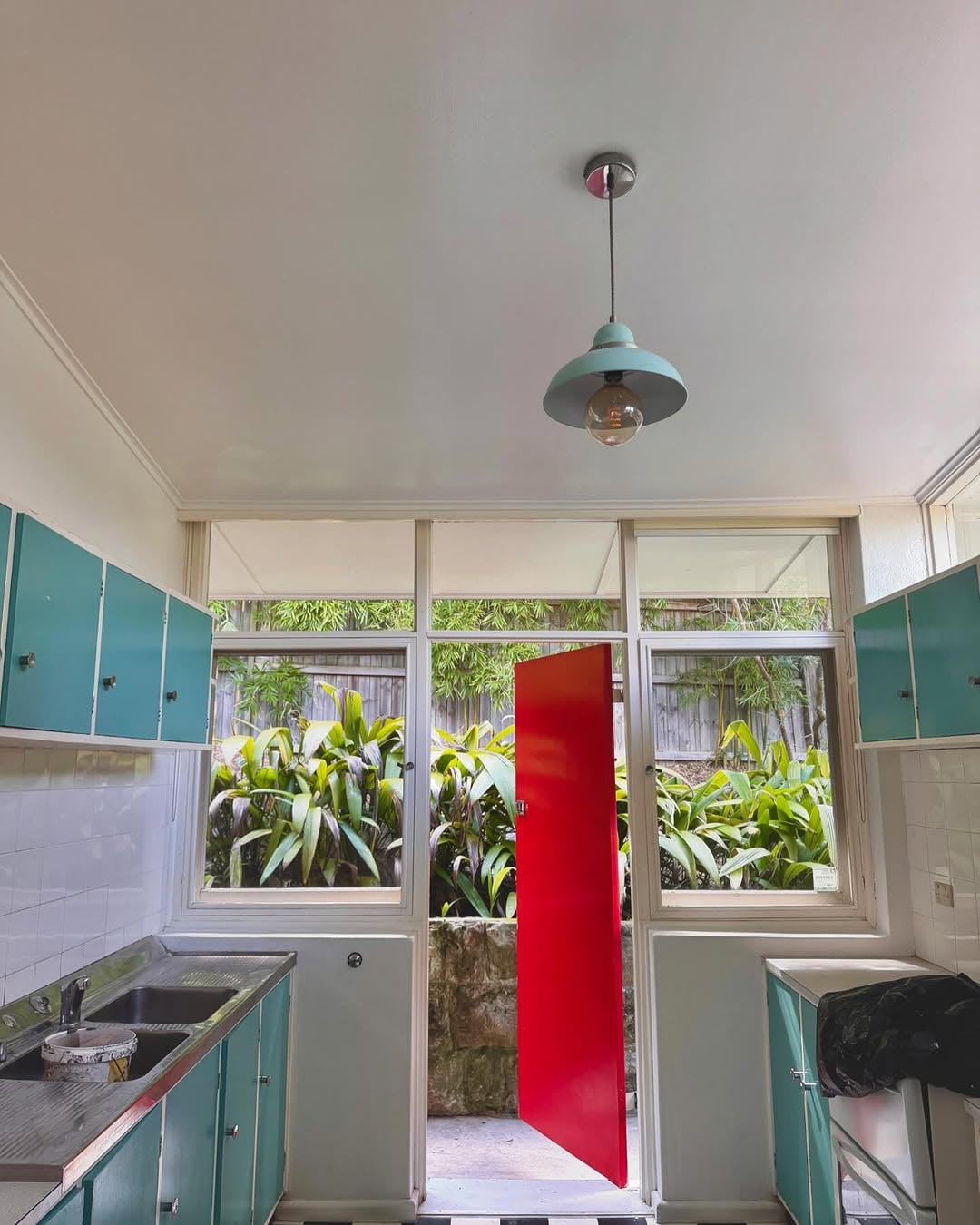
Use high gloss sparingly. A high-gloss front door in a bold colour makes a striking entrance. High-gloss cabinetry in a kitchen or bathroom gives a premium, contemporary look. High-gloss handrails on staircases are hard-wearing as well as good looking.
Pro tip: Applying high gloss to a large wall area is generally not recommended. The reflective surface will highlight every imperfection and can create uncomfortable glare in rooms with strong natural light, which is common in Eastern Suburbs homes.
Room-by-room finish guide
Here is a quick reference for choosing finishes throughout your home:
| Room | Walls | Ceiling | Trim & Doors |
|---|---|---|---|
| Living room | Low sheen or flat | Flat | Semi-gloss |
| Bedroom | Flat or low sheen | Flat | Semi-gloss |
| Kitchen | Low sheen or satin | Flat | Semi-gloss |
| Bathroom | Semi-gloss | Semi-gloss or flat | Semi-gloss |
| Laundry | Semi-gloss or satin | Flat | Semi-gloss |
| Hallway | Low sheen or satin | Flat | Semi-gloss |
| Children’s room | Satin | Flat | Semi-gloss |
| Home office | Low sheen | Flat | Semi-gloss |
| Front door | n/a | n/a | High gloss |
| Skirting boards | n/a | n/a | Semi-gloss |
Professional tips for getting the best result
1. Always get a sample pot
Colours look dramatically different under different lighting conditions. Paint a large swatch, at least A3 size and ideally larger, on the actual wall and look at it at different times of day. Morning light, midday sun, afternoon shade, and evening artificial lighting will each bring out something different in the colour and the finish. In Eastern Suburbs homes that get strong coastal light, finishes may appear shinier and colours lighter than they do on the colour chart.
2. Consider the room’s natural light
North-facing rooms in Sydney receive more direct sunlight through the day, which can make higher-sheen finishes look very glossy and create glare. In these rooms, consider stepping down one sheen level: flat instead of low sheen, or low sheen instead of satin. South-facing rooms receive softer, indirect light and can handle slightly higher sheen levels without looking too reflective.
3. Use the same brand throughout
Different paint brands have slightly different colour formulations, even when aiming for the same shade. Use the same brand across different finishes in the same room, for example Dulux Wash & Wear in low sheen on walls and Dulux Aquanamel in semi-gloss on trims, and the colour will stay consistent from wall to trim.
4. Preparation is everything
The best paint on a poorly prepared surface will never look right. This is especially true for higher-sheen finishes that amplify surface imperfections. We always thoroughly prepare surfaces before painting: filling cracks, sanding rough patches, spot-priming repaired areas, and getting the surface clean and dry. This preparation work is what separates a professional result from a disappointing one.
5. Ask a professional
If you are unsure about finishes, colours, or what products to use, we offer free colour and finish consultations as part of our quoting process. Our team has painted hundreds of homes across the Eastern Suburbs and can recommend the right combination of finishes for your specific rooms, lighting conditions, and lifestyle.
Once you have settled on finishes, choosing the right colours is the next step. Our guide to the top colour trends for 2026 is a good place to start.
Frequently asked questions
What paint finish is best for interior walls?
Low sheen (eggshell) is the most popular and versatile finish for interior walls in Australian homes. It hides minor imperfections while being durable enough to wipe clean. Use flat for formal rooms and ceilings, satin for high-traffic family areas, and semi-gloss for wet areas like kitchens and bathrooms.
What finish should I use for skirting boards and trims?
Semi-gloss is the standard finish for all interior trim work: skirting boards, architraves, door frames, and window frames. It provides a durable, wipeable surface that withstands daily wear and creates a clean contrast against lower-sheen walls.
Is satin or low sheen better for a living room?
For most living rooms, low sheen is the better choice. It provides a subtle warmth without highlighting wall imperfections. Satin is better suited to high-traffic family rooms where frequent cleaning is needed, as it offers superior wipeability at the cost of showing surface flaws more visibly.
How much does it cost to repaint the interior of a house in Sydney?
The cost varies significantly based on the size of the home, surface condition, number of colours, and the products used. Rather than guessing at a number, it is worth understanding what actually goes into a painting quote so you can compare quotes fairly and get the best value.
Need help choosing the right finish?
Our team has painted hundreds of homes across Maroubra, Coogee, Randwick, Bondi, Bronte, Kensington, and the greater Eastern Suburbs. We are happy to guide you through finish and colour selection as part of our free, no-obligation quote process.
Contact us today for advice on your next painting project. Call Trent on 0425 116 817 or send us a message through our website.
Related guides
- interior painting for Sydney homes: walls, ceilings and trims, with low-VOC options for occupied houses.
- end of lease painting in NSW: which finishes hold up in a rental, and who pays for the repaint.
- what goes into a painting quote: why two quotes for the same house differ by thousands.